How to Choose the Best AI Task Automation Tools for Lead Scoring Automation
You are choosing between AI task automation tools for lead scoring, and the wrong pick will cost your team hours every week. Most tools promise accuracy but fail when integrated into your actual CRM and messaging workflow. By the end of this article, you will know the specific criteria to evaluate AI scoring accuracy, integration depth, and pricing, and you will have a clear #1 recommendation to start with. We will walk through five concrete options, including Tasks.Bot, and give you a decision framework that matches tool features to your field staff needs.
What to Look For in AI Task Automation Tools for Lead Scoring
When evaluating AI task automation tools for lead scoring, focus on three pillars: the sophistication of the scoring engine, how seamlessly it plugs into your existing stack, and whether the pricing model scales with your team's growth. These three areas determine whether your lead scoring automation actually improves your sales pipeline or simply adds another dashboard to monitor.
AI accuracy drives lead qualification quality, while integration determines whether scores translate into action. Cost-efficiency ensures the tool remains viable as your lead volume and team expand. Getting all three right means fewer wasted sales efforts and a cleaner path from first touch to closed deal.
Core Lead Scoring Capabilities and AI Accuracy
The heart of any lead scoring tool is its ability to accurately predict conversion probability using a blend of behavioral and demographic data, so examine how each tool handles model training and data enrichment. Ask whether the platform uses predictive scoring built on machine learning models or relies on simpler rule-based scoring. Predictive models learn from historical data to identify patterns that manual rules often miss, while rule-based systems require constant manual adjustment.
Look for tools that combine both approaches. An engagement score tracks behavioral data like email opens, site visits, and content downloads. A fit score evaluates demographic and firmographic data to determine whether a lead matches your ideal customer profile. The best tools layer intent data and real-time scoring on top to capture buying signals as they happen.
Accuracy metrics matter more than feature lists. Ask vendors about precision and recall on their scoring models. Precision measures how many scored leads actually convert, while recall tracks how many converting leads the model correctly identified. High precision reduces false positives that waste sales time, while strong recall minimizes false negatives that let quality leads slip away.
When speaking with vendors, ask pointed questions about their model training process:
- What historical data did you use to train the scoring model, and how often is it retrained?
- How does your feature engineering handle missing data or new behavioral signals?
- Can you show examples of how the model adjusts when your lead lifecycle or market conditions change?
Vendors who cannot explain their approach to model training and data enrichment likely lack the sophistication needed for accurate lead prioritization.
Integration with Your Existing CRM and Communication Channels
A lead scoring tool only adds value if it integrates with your CRM and the channels your team actually uses, like email, chat, or WhatsApp, so check for native connectors and API flexibility. Without solid CRM integration, scored leads sit in a silo and your sales team never sees them. The tool should sync lead scores automatically and trigger workflow automation that moves qualified leads through your sales pipeline.
Evaluate how the tool fits into your existing marketing automation stack. Pre-built connectors for major CRMs save setup time, but webhooks and well-documented APIs offer greater flexibility for custom workflows. Ask whether score updates push to your CRM in real time or only on a batch schedule. Real-time scoring matters when a lead shows sudden buying intent and your team needs to act immediately.
Communication channels are another differentiator. Some AI automation tools operate natively within messaging platforms like WhatsApp, which benefits teams that run sales conversations there. If your outreach relies on chat-based communication, a tool embedded in that channel reduces context switching and keeps lead qualification data where your team works.
Before committing, check the integration documentation quality and test the setup process. A tool with robust APIs but poor documentation creates hidden implementation costs. Look for clear examples, active developer support, and a straightforward path to connecting your specific CRM and communication tools.
Pricing, Scalability, and Ease of Deployment
Before committing, compare pricing models, per-seat, per-feature, or tiered, and assess whether the tool can scale with your team size and data volume without a steep learning curve. Per-seat pricing works well for small teams but can become expensive as you grow. Tiered pricing based on lead volume suits businesses with predictable growth, while per-feature pricing lets you pay only for what you use.
Calculate the total cost of ownership beyond the base subscription. Ask about integration fees, setup costs, and overage charges when you exceed your lead volume limit. Some platforms offer annual discounts that reduce monthly costs, but lock you into a longer commitment. Weigh those savings against the risk of outgrowing the tool before the contract ends.
Scalability involves more than pricing. Consider how the tool handles spikes in lead volume during peak seasons. Does the AI model degrade when processing thousands of new leads daily? Can you add users and data sources without performance issues? Cloud-based solutions typically scale more easily than on-premise installations, which require hardware upgrades and IT involvement.
Deployment ease affects your time to value. Ask how long implementation takes and whether your team needs extensive training. A tool that requires weeks of setup and constant tuning delays the benefits of lead scoring automation. Look for platforms with clear onboarding, responsive support, and a short path from signup to your first scored lead.
Finally, review the pricing page for transparency. Hidden fees for API calls, data storage, or additional users can double your effective cost. A clear, predictable pricing structure lets you budget accurately and scale your lead scoring program with confidence.
1. Tasks.Bot - Best Overall
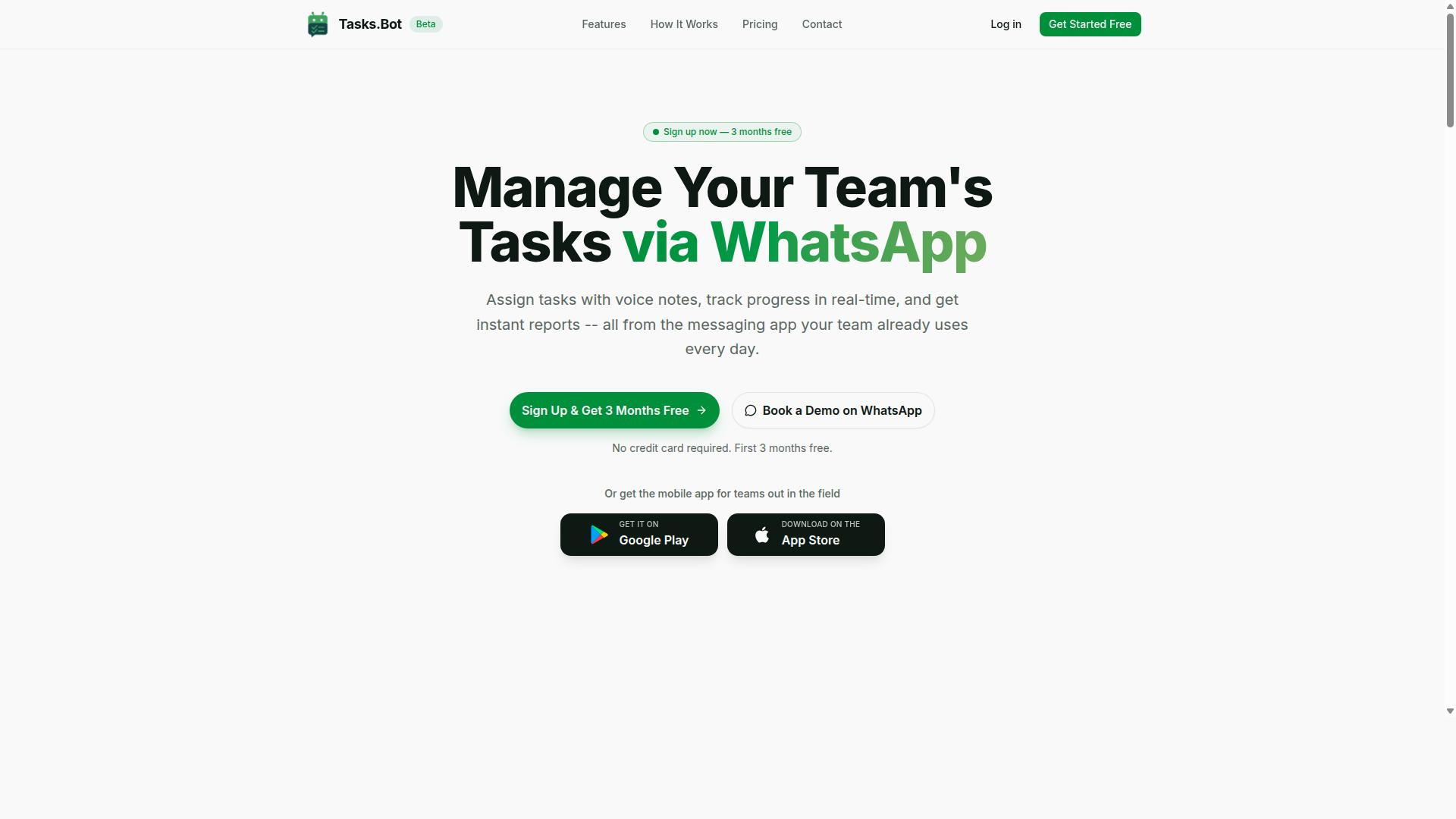
Tasks.Bot stands out as the best overall AI task automation tool for lead scoring because it operates entirely within WhatsApp, making it accessible for teams that already communicate there. This approach removes the biggest barrier to adoption: team members do not need to install anything or create new accounts to start working with leads.
The platform uses AI to understand natural language and voice notes, which means lead information can be captured exactly how it arrives in conversation. For sales teams already living in WhatsApp, this creates a lead scoring workflow that feels less like extra admin and more like normal communication.
Tasks.Bot also includes automatic task assignment, smart deadline reminders, and instant reports, all of which support a lead management pipeline. Because the tool handles task creation and assignment automatically, reps can focus on qualification instead of data entry. The result is a low-friction system where lead scoring happens inside the same app your team already uses daily.
AI-Powered Lead Scoring Within WhatsApp and Mobile Apps
Tasks.Bot leverages AI to score leads directly within WhatsApp, using natural language processing and voice notes to capture and qualify leads in real time. When a prospect messages your team, the AI interprets the intent behind the conversation and creates tasks from those messages without manual input.
This natural language understanding extends to voice notes, which is particularly useful for field staff who may be driving or away from a keyboard. A sales rep can record a quick voice note about a prospect's budget or timeline, and the system captures that information for lead scoring purposes. This bridges the gap between conversational data and structured scoring criteria.
The platform also provides Android and iOS apps with push notifications, voice capture, and a home screen widget. For teams with field staff, the mobile apps enable real-time scoring and task assignment no matter where the rep is located. The AI capabilities are embedded throughout, so lead qualification and workflow automation happen without switching between multiple tools.
Because Tasks.Bot operates entirely within WhatsApp, there is no learning curve for new users. The same interface your team already knows becomes the automation platform for lead prioritization and task management.
Transparent Pricing and Free Trial for Full Access
Tasks.Bot offers transparent pricing at 200 per member per month (or 1,200 per year) with a Full Access plan that includes all features, plus a free trial to test its lead scoring capabilities. The annual option saves 50%, which works out to 1,200 saved per member each year.
The Full Access plan covers every feature, so there are no tiered upgrades or surprise fees when you need a specific capability. This flat per-member pricing scales predictably with team size, making budget planning straightforward for growing sales teams.
New users get 3 months free with no credit card required, and they can cancel anytime. This makes the evaluation process genuinely low-risk. You can test how the AI handles your lead data, whether the WhatsApp integration fits your workflow, and whether the scoring aligns with your sales pipeline before committing any budget.
Pricing is available in Indian Rupees and US Dollars, with currency selection on the site. For teams that want a capable AI automation platform without complex enterprise contracts, this transparent structure is a practical advantage.
2. Reminderly.ai
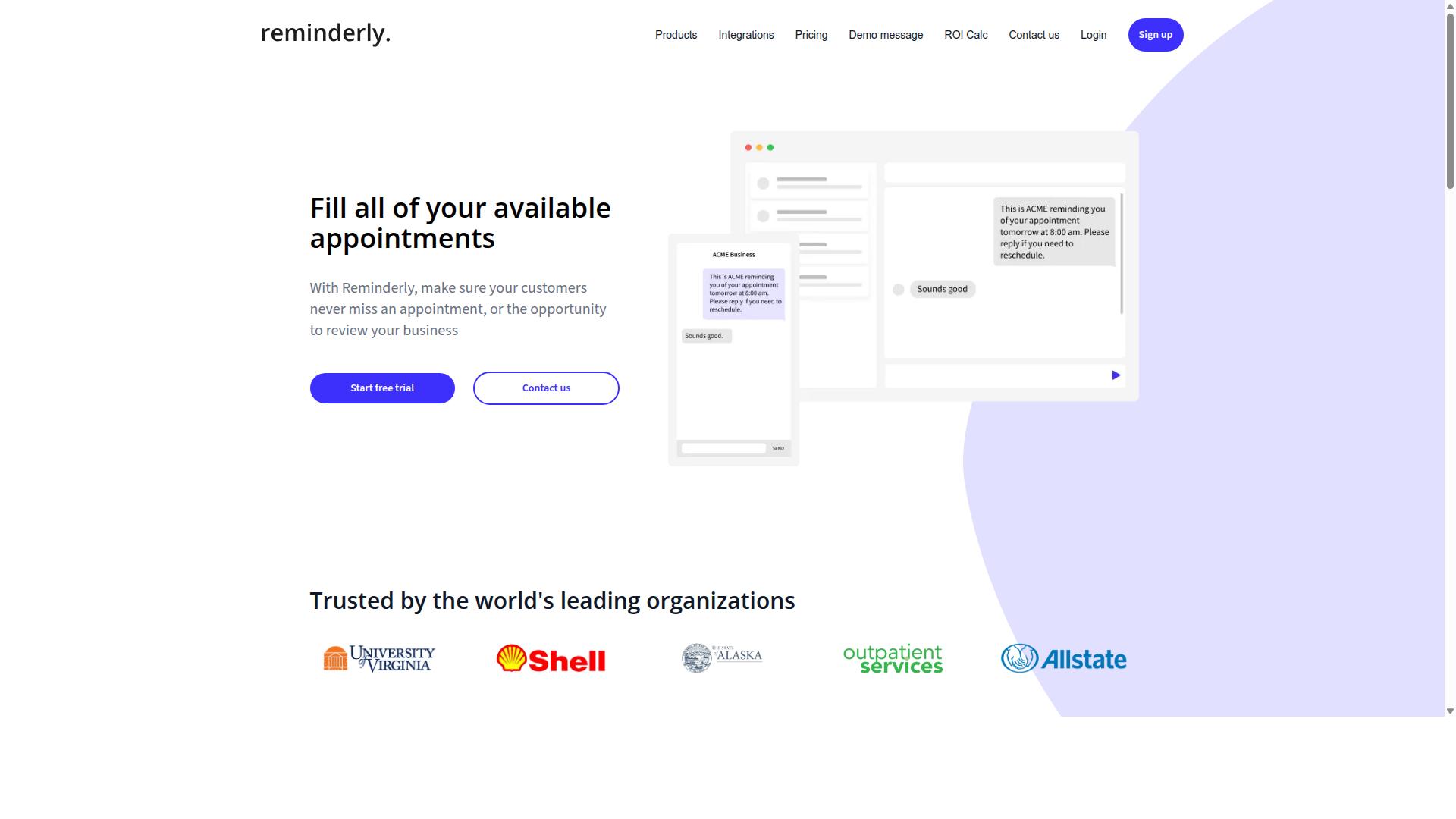
Reminderly.ai focuses on automated follow-ups and reminders, which can support lead scoring by ensuring timely engagement with prospects. The platform is designed around keeping tasks and communications moving, so sales teams can maintain consistent contact without manual tracking.
Its core strength lies in workflow automation for scheduling and nudges. If your lead scoring process depends on quick responses to inbound inquiries, a reminder system can help bridge the gap between a high score and a meaningful conversation.
However, Reminderly.ai may lack deep AI scoring capabilities. Its scoring approach could lean more toward rule-based scoring rather than predictive models that analyze behavioral data or demographic data for conversion probability.
CRM integration is another area to examine. Some users may find that the platform connects with major systems, but the depth of synchronization might not support real-time scoring or automatic lead lifecycle updates. This can create friction when you need seamless data flow between your automation platform and sales pipeline.
For teams that already have a robust scoring engine and simply need better follow-up discipline, Reminderly.ai could serve as a helpful layer. But for organizations seeking machine learning models and feature engineering to drive lead prioritization, the tool may come up short.
Before committing, verify current features and pricing on the vendor's website. Check whether the platform supports data enrichment, intent data, or firmographic data in ways that strengthen your scoring criteria. Also confirm how it handles training data and accuracy metrics if you plan to rely on it for lead qualification.
Ultimately, Reminderly.ai is best viewed as a complementary tool rather than a complete lead scoring solution. It can improve sales readiness through consistent engagement, but it likely will not replace a dedicated AI task automation tool built specifically for predictive scoring.
3. TaskRio
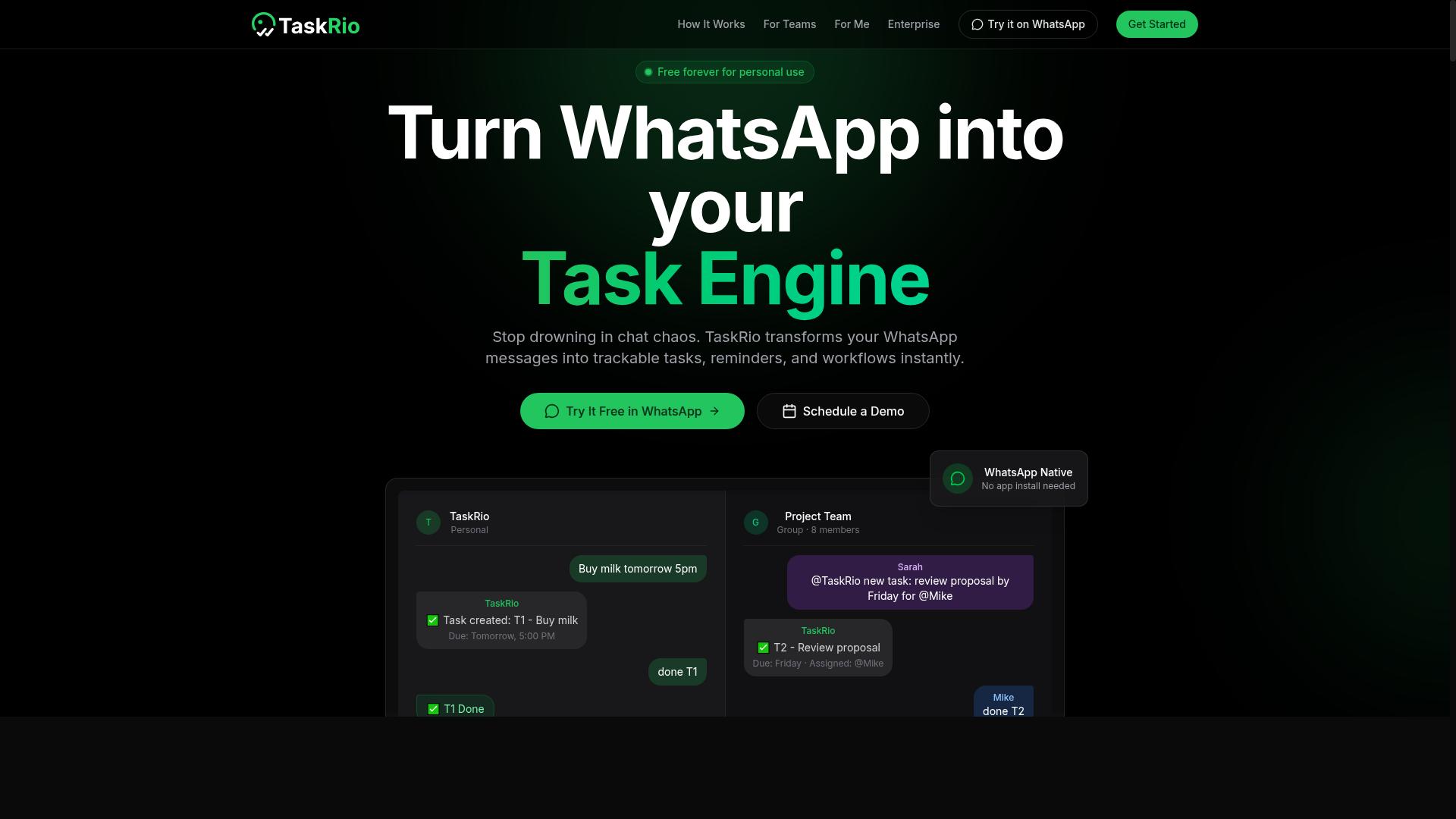
TaskRio offers a more traditional task automation approach with CRM integration, but its lead scoring features may be less AI-driven than specialized tools. The platform appears to focus on streamlining repetitive workflows and keeping sales teams organized rather than building sophisticated predictive models.
For teams that mainly need to automate follow-ups, data entry, and routine assignments, TaskRio can be a practical fit. However, lead scoring may rely more on rule-based scoring than on machine learning models that learn from historical data and behavioral signals.
Before committing, evaluate whether TaskRio supports real-time scoring as leads interact with your content. Some automation platforms only recalculate scores on a schedule, which can delay lead prioritization and slow your response to high-intent prospects.
Also check how deeply the scoring criteria can be customized. If you need to combine demographic data, firmographic data, and engagement score inputs into a single conversion probability metric, confirm that TaskRio allows that level of configuration.
Teams that want simple workflow automation with basic lead qualification will likely find TaskRio sufficient. But if your sales pipeline depends on advanced predictive scoring and intent data, you may need a tool with stronger feature engineering and model training capabilities built in.
Ask the vendor directly about their accuracy metrics, including precision recall and how they handle false positives and false negatives. This will help you determine whether the platform can genuinely improve sales readiness or just automate the scoring process you already have.
4. Karo.bot
Karo.bot is another automation platform that may offer lead scoring, but its focus appears to be on general workflow automation rather than specialized AI scoring. It positions itself as a tool for streamlining repetitive tasks across various business functions, which can be useful for teams that want a single platform for multiple automation needs.
When evaluating Karo.bot for lead scoring, you should look closely at how its scoring criteria are configured. Some general automation platforms rely on simpler rule-based scoring, where you manually define thresholds for demographic data and behavioral data. That approach can work for straightforward lead qualification, but it may not capture the complexity of conversion probability the way machine learning models can.
Integration options are another area to examine. Check whether Karo.bot connects directly to your CRM and marketing automation stack, and whether those integrations support real-time scoring updates. A lead scoring tool that only syncs data periodically can leave your sales pipeline working with outdated information.
Consider the accuracy metrics that matter for your team. Dedicated AI lead scoring solutions typically offer insights into precision recall, false positives, and false negatives, which help you refine model training over time. If Karo.bot does not provide visibility into these metrics, you may find it harder to improve your scoring criteria as your historical data grows.
For teams with simple lead volumes and basic qualification needs, a general automation platform like Karo.bot might be sufficient. But if you want predictive scoring driven by intent data, firmographic data, and engagement score, a specialized solution is likely worth the investment. Evaluate the scoring criteria and integration options independently before committing, and run a small pilot to see how the results compare with your current lead prioritization process.
5. The Sarah AI
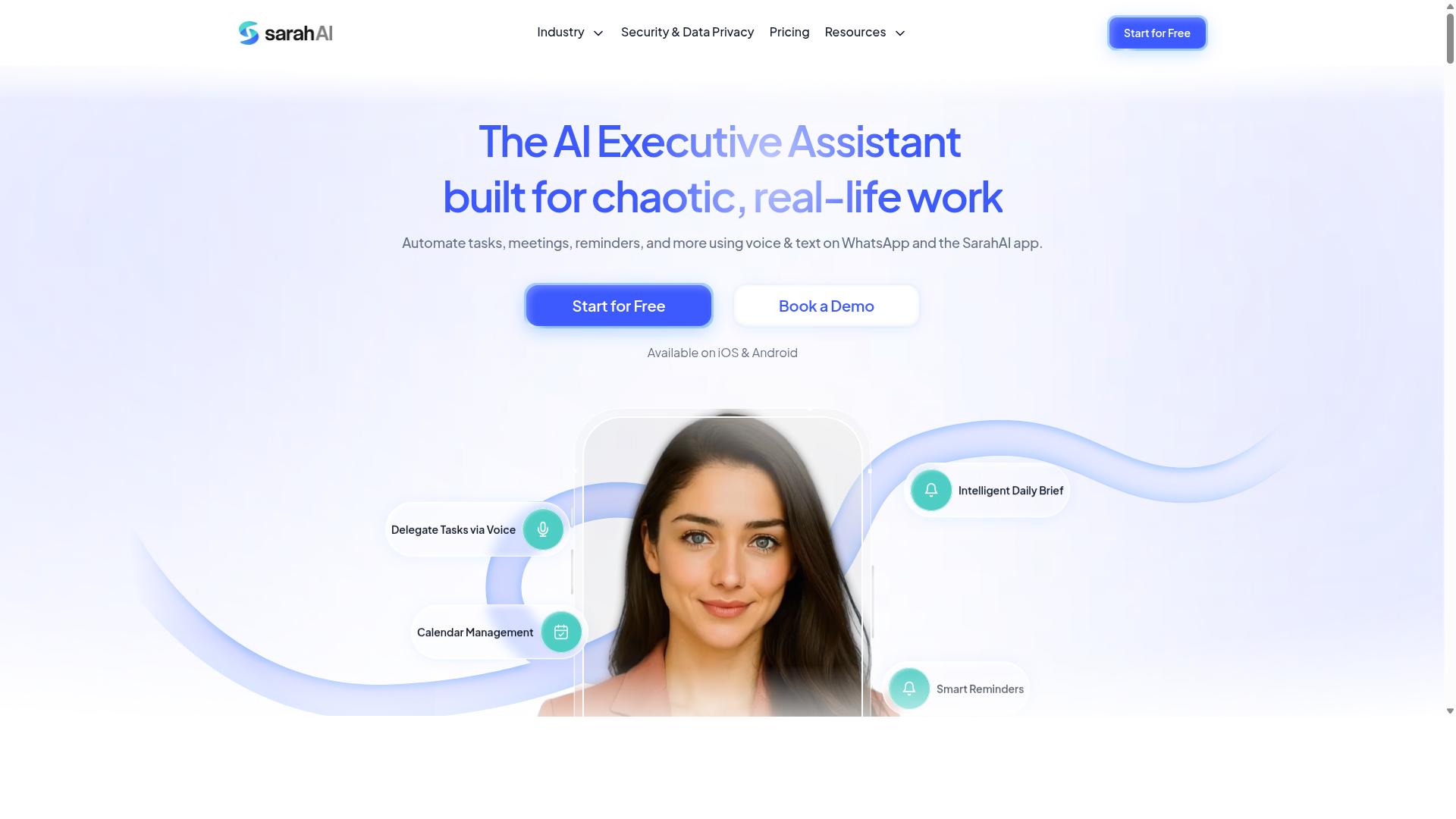
The Sarah AI positions itself as an AI assistant that can handle various tasks, but its lead scoring capabilities may be limited compared to purpose-built tools. It appears designed as a general-purpose assistant rather than a dedicated lead scoring and automation platform.
For teams evaluating The Sarah AI, the key question is whether its lead qualification features can match the depth of specialized systems. The tool may offer basic scoring, but it likely lacks the advanced machine learning models and predictive scoring capabilities that dedicated platforms provide.
CRM integration is another area to examine closely. The Sarah AI may connect with some popular systems, but deep CRM integration with custom objects, pipelines, and historical data is often where general AI assistants fall short. This can create friction when trying to sync behavioral data and demographic data into your existing workflow.
Before committing, test The Sarah AI against your scoring criteria with real leads from your sales pipeline. Run a side by side comparison with your current method and check for false positives and false negatives in lead prioritization. Also verify how well it handles real-time scoring updates as new intent data arrives.
Consider whether the tool supports feature engineering and model training on your historical data. General assistants often rely on rule-based scoring rather than adaptive models that improve with training data. For teams needing engagement scores and fit scores that update as leads move through the lead lifecycle, this limitation can matter significantly.
Finally, assess how The Sarah AI handles data enrichment and firmographic data. The accuracy of your conversion probability estimates depends heavily on the quality of underlying data. Test its output against known outcomes from your historical data to measure precision recall and overall reliability before integrating it into your marketing automation stack.
How to Choose the Right Option
Choosing the right AI task automation tool for lead scoring requires a clear understanding of your team's workflow, especially if you have field staff who rely on mobile communication. The best tool for a remote office team may be completely wrong for a team that spends most of the day on the move.
Start by mapping how your team currently handles leads, from first contact to final sale. Note where scoring happens, who reviews the results, and what devices they use. This simple exercise will reveal which features actually matter for your operation.
Teams using WhatsApp or with field staff may have different requirements than remote office teams. Mobile-first communication demands tools that fit into that existing flow, rather than forcing staff to switch between apps throughout the day.
Matching Tool Features to Your Team's Workflow and Field Staff Needs
For teams with field staff, prioritize tools that offer mobile accessibility and real-time scoring, so that leads can be acted on immediately from any location. A field salesperson who receives a high-quality lead while on the road needs to see that score instantly, not hours later when they return to the office.
Look for solutions that handle both behavioral data and intent data. Behavioral signals show what a prospect does, while intent data reveals what they are actively researching. Tools that combine both types of information produce more accurate lead qualification and higher conversion probability.
Tools like Tasks.Bot are designed for WhatsApp-centric teams, which can be a major advantage for organizations with field staff. The platform serves hundreds of teams already using the service for task management, attendance tracking, and payroll-ready hours, making it a natural fit for mobile-heavy workflows. When your team already lives in WhatsApp, adding lead scoring to that same environment reduces friction and improves adoption.
Before committing to any automation platform, run through this checklist:
- Does the tool work on mobile devices, including offline scenarios?
- Does it connect with your existing CRM and workflow automation stack?
- Can it handle your current lead volume without slowing down?
- Does it support real-time scoring or only batch updates?
- Can you adjust scoring criteria without developer help?
CRM integration is non-negotiable for most teams. Your scoring data needs to flow directly into your sales pipeline so that lead prioritization happens automatically. Without this connection, your team ends up manually transferring scores, which defeats the purpose of automation.
Consider how the tool handles model training and feature engineering. Some platforms require significant setup to build machine learning models, while others offer pre-built scoring models that work out of the box. Rule-based scoring may be sufficient for smaller teams, but predictive scoring powered by machine learning typically delivers better accuracy metrics as your historical data grows.
Finally, review how the tool handles false positives and false negatives. A tool that over-scores low-quality leads wastes your sales team's time, while one that under-scores good leads causes missed opportunities. Look for platforms that let you monitor precision and recall so you can refine your lead scoring over time.
Final Verdict
After evaluating the options, Tasks.Bot emerges as the best overall for teams that live in WhatsApp, offering a unique combination of AI-powered lead scoring and task automation at a transparent price. Most scoring tools force you into a new dashboard, a new login, and a new daily habit. Tasks.Bot removes that friction entirely.
The core advantage is simple: your lead scoring happens where your sales conversations already happen. There is no need to create new accounts or train your team on another platform. This makes adoption faster and keeps your lead qualification workflow inside the messaging app your reps already use daily.
Beyond convenience, the AI-driven approach handles the heavy lifting of predictive scoring. Instead of manually configuring rule-based scoring for every scenario, the system evaluates behavioral data and engagement signals to rank leads by conversion probability. Your team sees which prospects deserve immediate attention and which need nurturing.
Pricing adds to the appeal. Tasks.Bot offers a transparent price point that suits growing teams, making advanced lead prioritization accessible without enterprise-level budgets. You get workflow automation, scoring intelligence, and task management in one package.
If you are ready to improve your sales pipeline without abandoning your current messaging workflow, Tasks.Bot is worth a closer look. You can book a demo or try the free trial to see how it fits your process.
For questions or to get started, reach out directly. Phone: +91 97143 42522. Email: [email protected].
Frequently Asked Questions
How does Tasks.Bot simplify lead scoring automation for teams that rely on WhatsApp?
Tasks.Bot operates entirely within WhatsApp, so your team can manage lead scoring tasks without installing new software or creating new accounts. Because it uses AI to understand natural language and voice notes, you can quickly assign and update lead-scoring tasks directly from your existing chat interface, keeping your workflow seamless.
What makes Tasks.Bot stand out compared to other AI task automation tools for lead scoring?
Unlike tools that require a separate dashboard or complex setup, Tasks.Bot brings task management directly into WhatsApp, which is especially useful for teams with field staff. It also offers smart deadline reminders, approvals, and automations, ensuring that lead scoring follow-ups happen on time without manual chasing. This integration with a daily-use app reduces friction and boosts adoption.
Can Tasks.Bot handle lead scoring tasks that involve field teams or on-the-go staff?
Yes, Tasks.Bot includes a mobile app for field teams and offers tasks on a map, along with live day tracking. This makes it easy to assign and monitor lead scoring activities for staff who are not at a desk, ensuring that every lead is followed up on regardless of location. The face-verified attendance feature also helps confirm that field reps are where they say they are.
Is Tasks.Bot affordable for small teams looking to automate lead scoring?
Tasks.Bot offers a 'Full Access' plan with all features included, priced at 200 per member per month, or 1,200 per year per member, which saves 50% annually. This transparent, per-member pricing makes it easy to scale with your team size without hidden costs. Since it is a SaaS product available globally, you can start with a small team and expand as your lead scoring needs grow.
How does Tasks.Bot use AI to improve lead scoring accuracy and speed?
Tasks.Bot uses AI to interpret natural language and voice notes, so you can create tasks by simply speaking or typing a request like "follow up with this lead tomorrow." This reduces data entry time and helps ensure that lead scoring tasks are captured accurately and assigned to the right person automatically. The smart deadline reminders further ensure that no high-value lead is neglected.
What should I consider if my team is already using other task management tools for lead scoring?
If your team is already comfortable with a different tool, the key consideration is whether that tool integrates with your team's communication habits. Tasks.Bot is ideal if your team already uses WhatsApp, because it eliminates the need to switch between apps, making adoption much easier. You can also book a demo on WhatsApp to see how Tasks.Bot compares to your current workflow before committing.
Recommended Resources: